


Recently in Social Media Category

Mark Barrett
3 Comments
3 Comments
July 13, 2011 9:45 AM
Google have not yet begun to make a huge noise about Google+. This is probably for two reasons;
A) They seem to be ironing out a few kinks.
B) Why bother putting time and effort into marketing when the marketing community is putting so much time and effort into doing the job for them? I speak of the relentless commentary and speculation that has been pushed out by the marketing community since, the idea was first mentioned.
Until recently, Google has kept the user-base relatively small, not wanting to launch to the masses until they were sure that the product was ready, but it seems that more and more invitations are now being actioned and the community seems to be growing apace.
Now most commentary has spoken of Google+ as a direct challenge to Facebook and Google's attempt to become a major player in the social media turf war, but I think this view is somewhat short-sighted and seriously underestimates Google's ambitions and the effect that this platform could have, not just on Facebook, but the entire social media landscape.
Having had an opportunity to play with Google+ for a couple of days, its potential (in my mind) is truly staggering. Some critics have voiced their discontent at the seemingly basic interface and its limited nature. Those critics are the people that thought Google+ was Facebook 2.0.
At this point, you have a profile, a photo gallery and a streams of friends' shares & status updates... all very Facebook-esque, but then there are your 'circles'. Circles are categories that you can place your contacts into, to segment them into audiences. Thus far, the promotion of 'circles' has been around segmenting your contacts into friends, close friends, colleagues, acquaintances and all other manner of social circles. What seems to have been overlooked is the major play that 'circles' could make into Twitter's market share.
There has long been a clear distinction between Facebook and Twitter. Facebook is a private platform where you share with those that you choose. Twitter is a much more public platform where you share with people that choose you. It looks to me as though Google+ bridges the gap between these platforms with beautiful effectiveness. Through the use of 'circles' you can easily assemble a mass audience and segment them into the people you share your life with, the people you share your brand with and the people you share your insight, opinions and knowledge with.
Facebook have had something slightly similar to 'circles' for a long time, in the form of friend 'lists' but the production and administration of these 'lists' has been clunky and awkward and in fact, there has been very little in the way of promotion and guidance in relation to them. This is where 'circles' differ.
Google have focused their platform around 'circles' and in doing so, have set themselves apart from the competition. 'Circles' are very simple to create & manage, and when sharing statuses or media it requires minimal effort to share publicly or to choose specific audiences in the form of 'circles'.
For example, I work as a search marketing consultant, I have my usual Facebook style 'circles' for friends and family etc. but then I have circles for PPC, SEO and Social Media and in these sections I plan to segment the contacts that I discuss my industry with. This way, if I want to share a link about the latest link building strategies, or a cool viral campaign, I don't have to bore my totally uninterested friends with it; I can simply select the circles that will have an interest. On the other side, I may not want to share my weekend's frivolities with industry peers, so I simply select the most relevant 'circle' in which to discuss the new cocktail we invented at 4am on Friday night.
In my opinion Facebook & Twitter have every reason to be concerned as Google appears to have come up with a platform that can offer the best of both worlds in one simple, easy platform.
Of course, only time will tell with Google+, there's every possibility that the mass market will reject the platform if they remain ill informed and refuse to join, thinking that the "new Facebook" called Google+ is not as good as the "original Facebook."
Read full post
A) They seem to be ironing out a few kinks.
B) Why bother putting time and effort into marketing when the marketing community is putting so much time and effort into doing the job for them? I speak of the relentless commentary and speculation that has been pushed out by the marketing community since, the idea was first mentioned.
Until recently, Google has kept the user-base relatively small, not wanting to launch to the masses until they were sure that the product was ready, but it seems that more and more invitations are now being actioned and the community seems to be growing apace.
Now most commentary has spoken of Google+ as a direct challenge to Facebook and Google's attempt to become a major player in the social media turf war, but I think this view is somewhat short-sighted and seriously underestimates Google's ambitions and the effect that this platform could have, not just on Facebook, but the entire social media landscape.
Having had an opportunity to play with Google+ for a couple of days, its potential (in my mind) is truly staggering. Some critics have voiced their discontent at the seemingly basic interface and its limited nature. Those critics are the people that thought Google+ was Facebook 2.0.
At this point, you have a profile, a photo gallery and a streams of friends' shares & status updates... all very Facebook-esque, but then there are your 'circles'. Circles are categories that you can place your contacts into, to segment them into audiences. Thus far, the promotion of 'circles' has been around segmenting your contacts into friends, close friends, colleagues, acquaintances and all other manner of social circles. What seems to have been overlooked is the major play that 'circles' could make into Twitter's market share.
There has long been a clear distinction between Facebook and Twitter. Facebook is a private platform where you share with those that you choose. Twitter is a much more public platform where you share with people that choose you. It looks to me as though Google+ bridges the gap between these platforms with beautiful effectiveness. Through the use of 'circles' you can easily assemble a mass audience and segment them into the people you share your life with, the people you share your brand with and the people you share your insight, opinions and knowledge with.
Facebook have had something slightly similar to 'circles' for a long time, in the form of friend 'lists' but the production and administration of these 'lists' has been clunky and awkward and in fact, there has been very little in the way of promotion and guidance in relation to them. This is where 'circles' differ.
Google have focused their platform around 'circles' and in doing so, have set themselves apart from the competition. 'Circles' are very simple to create & manage, and when sharing statuses or media it requires minimal effort to share publicly or to choose specific audiences in the form of 'circles'.
For example, I work as a search marketing consultant, I have my usual Facebook style 'circles' for friends and family etc. but then I have circles for PPC, SEO and Social Media and in these sections I plan to segment the contacts that I discuss my industry with. This way, if I want to share a link about the latest link building strategies, or a cool viral campaign, I don't have to bore my totally uninterested friends with it; I can simply select the circles that will have an interest. On the other side, I may not want to share my weekend's frivolities with industry peers, so I simply select the most relevant 'circle' in which to discuss the new cocktail we invented at 4am on Friday night.
In my opinion Facebook & Twitter have every reason to be concerned as Google appears to have come up with a platform that can offer the best of both worlds in one simple, easy platform.
Of course, only time will tell with Google+, there's every possibility that the mass market will reject the platform if they remain ill informed and refuse to join, thinking that the "new Facebook" called Google+ is not as good as the "original Facebook."
Sites we love
- Casinos Not On Gamstop
- Non Gamstop Casinos
- Casinos Not On Gamstop
- UK Betting Sites
- Casino Sites Not On Gamstop
- Best Non Gamstop Casinos UK 2025
- Non Gamstop Casino UK
- Best Non Gamstop Casinos
- Non Gamstop Casinos UK
- Non Gamstop Casinos
- Casino Sites Not Blocked By Gamstop
- Non Gamstop Casinos UK
- Casino Not On Gamstop
- Non Gamstop Casinos
- Slot Sites UK
- Non Gamstop Casino Sites UK
- Casino Sites UK Not On Gamstop
- UK Casinos Not On Gamstop
- Non Gamstop Casino
- UK Online Casinos Not On Gamstop
- New Non Gamstop Casinos Uk
- UK Casino Not On Gamstop


June 30, 2011 9:39 AM
"Why don't you just skip the foundations, no need with walls, a roof on stilts would be just as good and be cheaper and quicker to do" said the social media Builder from Brixton.
Would you live in a house like this?
 Of course not, because as soon as some great big nasty gust of wind comes along, this quick fix house will be flattened, gone, demolished, destroyed, wiped out...... capiche? Without foundations, walls, ceilings and everything that makes a house it is only a matter of time before it all falls down. So why would you carry out social media without getting the foundations of your site right first? Time and time again people get carried away with the next best thing and forget about the one thing that supports all of your activities, your website!
Search is an ever evolving practice, there is always the 'next best thing' and don't get me wrong I love a little 'tweet tweet' here and a little 'like like' there BUT, I always insist that the basics are in place first. Social media is a great way of generating buzz and noise for your brand, is a great way to syndicate your content to a wider audience and engage with a mass audience. However, it is not consistent; you will have peaks and troughs of traffic and engagement levels.
"We would like a loft extension, a conservatory, a garage, a swimming pool, decking and any other extension" said the home owner to the builder.... "but what about the foundations" .... "nah we would rather have the loft conversion".
So many companies nowadays say "but we have a Facebook page, we have a twitter account, we are on LinkedIn", which is excellent until I look at their site which is not optimised, not user friendly, has no clear call to action and quite frankly no purpose.
Would you live in a house like this?
 NO - because getting builders in to come and lay the foundations or add plumbing and wiring to make this monstrosity stable would cost a fortune - do it right at the beginning and all of these add on social media activities will be much more beneficial.
Whether it is now or a year down the line when you have to stop everything and redo- your site, you will realise that the next best thing is not always the best thing for your company. Often we have started a social media strategy only to stop and work on the site first before re-launching the campaign. Why send people to a shoddy site when you can create a great site which supports all of your activity.
Would you live in a house like this?

I know I would.....a sturdy, strong house which would stand the test of time, which you could build upon and grow? .......who wouldn't??!!!
Your site is where you can convert your audience
Your site is where you can compete with your competitors
Your site is where you can talk to your audience in more than 140 characters
Your site is where you can increase your visibility on the search engines for non brand terms.
Get the basics right first, then build on your strategy. Make sure your site is:
- Optimised on and off page
- Technically sound, in terms of navigation and crawlabilty
- Offering appealing content, through copy or resources.
- Offering a clear call to action
Get all of these things right and then build on your activities. This way your site will improve in search engine visibility for target keywords, your users will be able to navigate through your site and find relevant content and you will have new fresh content to promote via your social media activities.
Read full post
Would you live in a house like this?
Of course not, because as soon as some great big nasty gust of wind comes along, this quick fix house will be flattened, gone, demolished, destroyed, wiped out...... capiche? Without foundations, walls, ceilings and everything that makes a house it is only a matter of time before it all falls down. So why would you carry out social media without getting the foundations of your site right first? Time and time again people get carried away with the next best thing and forget about the one thing that supports all of your activities, your website!Search is an ever evolving practice, there is always the 'next best thing' and don't get me wrong I love a little 'tweet tweet' here and a little 'like like' there BUT, I always insist that the basics are in place first. Social media is a great way of generating buzz and noise for your brand, is a great way to syndicate your content to a wider audience and engage with a mass audience. However, it is not consistent; you will have peaks and troughs of traffic and engagement levels.
"We would like a loft extension, a conservatory, a garage, a swimming pool, decking and any other extension" said the home owner to the builder.... "but what about the foundations" .... "nah we would rather have the loft conversion".
So many companies nowadays say "but we have a Facebook page, we have a twitter account, we are on LinkedIn", which is excellent until I look at their site which is not optimised, not user friendly, has no clear call to action and quite frankly no purpose.
Would you live in a house like this?
NO - because getting builders in to come and lay the foundations or add plumbing and wiring to make this monstrosity stable would cost a fortune - do it right at the beginning and all of these add on social media activities will be much more beneficial.Whether it is now or a year down the line when you have to stop everything and redo- your site, you will realise that the next best thing is not always the best thing for your company. Often we have started a social media strategy only to stop and work on the site first before re-launching the campaign. Why send people to a shoddy site when you can create a great site which supports all of your activity.
Would you live in a house like this?
I know I would.....a sturdy, strong house which would stand the test of time, which you could build upon and grow? .......who wouldn't??!!!
Your site is where you can convert your audience
Your site is where you can compete with your competitors
Your site is where you can talk to your audience in more than 140 characters
Your site is where you can increase your visibility on the search engines for non brand terms.
Get the basics right first, then build on your strategy. Make sure your site is:
- Optimised on and off page
- Technically sound, in terms of navigation and crawlabilty
- Offering appealing content, through copy or resources.
- Offering a clear call to action
Get all of these things right and then build on your activities. This way your site will improve in search engine visibility for target keywords, your users will be able to navigate through your site and find relevant content and you will have new fresh content to promote via your social media activities.
Mark Barrett
November 30, 2009 11:17 AM
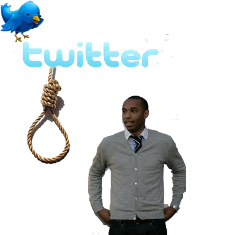 "The reactionaries are in possession of force, in not only the army and police, but in the press and the schools" John Dewey (American Philosopher, Psychologist and Educator, 1859-1952)
I've been with Base One for a few weeks now and was told that my settling in period had come to an end, the kid gloves were off and I was "asked" to produce my first post for the company.
I was racking my brains about what to post about when, over 200 miles from my home an incident occurred. A single action; followed by a difficult decision, leading to an outcome that has seen a man's reputation destroyed and talk of economic consequences to the countries involved.
I speak of Thierry Henry and what is now being dubbed "La main de Dieu" (Hand of God). For those that don't know what happened, France progressed to the World Cup at the expense of the Republic of Ireland. The decisive goal, scored by William Gallas was set up by Thierry Henry who handled the ball before crossing to his team mate.
Now I won't be discussing the incident itself, instead I am looking at the part played by Social Media in the syndication and resulting emotional outpouring from large numbers of individuals across the globe.
The power of the press is Waning, yielding to the Power of the People. Nowadays anyone with a link to the Internet and an opinion can affect the views of the masses, and generally steal a march on the larger press by publishing instantly. This news is swiftly syndicated through the various bookmarking and newswire websites and then Social Networking is utilised to provide a platform to discuss, debate and in some cases "vent;" like a child wielding his dads' rifle.
It was through this medium that I watched Thierry Henry's fall from grace. People from different countries and different walks of life fuelled a relentless wave of different opinions and different emotions, the overwhelming emotion being anger.
Taking Twitter as my first example, within minutes of the incident, whilst the match was still playing in fact, the torrent had begun. By the full-time whistle Tweets appeared to be coming in at around 195 every 30 seconds. Within the hour after the final whistle "Thierry Henry" and "Henry" had become trending topics. At 10am, on the 20th of November (Over 36 Hours after the event) the tweets continue although flow has calmed to a handful a minute.
Where Twitter quickly built to a deafening crescendo and dissipated in much the same way, Facebook built quickly and seemed to maintain some momentum. Immediately after the incident my "Live News" was full of related comments which continued into the night and the following morning,
I also came across the Facebook Page - "We Irish hate Thierry Henry (The Cheat)" which was created after the match. By Midday on 19th November, the page had 30,000 fans then by 10am on 20th November the number of fans had swelled to over 80,000 and was then removed Facebook due to the nature of the group and the offensive nature of the comments being posted.
YouTube was also pounced upon with multiple videos posted, commanding views numbering in the tens of thousands. Replaying, berating, and making fun of Thierry Henry including a depiction of Adolf Hitler's reaction to the goal.
A man made a choice; that choice was instantly scrutinized worldwide, and brought to the attention of millions by angered voices without hesitation, or thought to the possible fallout. This led to threats of violence, unchecked widespread racism and other ugly human traits in true "Angry Mob" style.
The beauty of Social Media is that it provides total freedom of expression, but that total freedom can also show its dark side; when it is used to personally attack someone or something.
Social Media can be an extremely effective weapon, with the power to change lives.
Is it too easy to wield?
Is there anything we can do about it?
If there is, do we want to?
April 22, 2009 4:30 PM
I've been playing around with a Digg account lately, trying to figure out how to best incorporate our clients content into this fun social networking site. Digg is unique because it doesn't
1.An Ace Nickname: The Username. I'm a big fan of creating plausible usernames - in this case I used my real name. As a newbie, using a normal name like "Scott Osman" or "Miranda Mocco" helps sets the precedent that you're not a bot out to spam.
2.It's all About Looks: Your Avatar. This needs to be unique from other users and if possible, consistent across social networking sites. I threw a relatively ugly yellow border around my image, as an easy way for people to indicate it's me. Check out some successful avatars and get a little feedback on what people think of yours. http://avatarwall.com/toprated. Again, I found that as a newbie, people like seeing a face, it makes communicating more friendly, but as always different people like different things.
3.Hang Out in the Cool Places: Share Your Profiles! Digg permits members to share tons of profile links, be sure to take advantage of this so your future friends can easily contact you. Be sure to include your: Twitter, AIM, MSN, Yahoo!, Gchat, last.fm, facebook, linked in, reddit, and stumble upon profiles.
4.Make friends with the popular crowd. Long ago Digg had a top users list (sometimes referred to as the "holy grail"), but it was deleted. I used an alternative list set up by SocialBlade to friend top active diggers.
By friending them, you will become their "fan" whereby you receive updates on their Digg activities; it is only when they accept you as a friend that your status is certified as "mutual friends" and your activity will be received by them.
5.Identify stylish trends: Pin Pointing Submissions with Front Page Potential. How do you find the high potential articles when the majority of submissions are spam with one or two Diggs? First and foremost, digg your friends submissions as they appear, especially if the friend sends a "shout" (like a facebook wall post) promoting a certain submission. You're allowed 200 diggs a day - depending on how much of a life you have, try to use all 200.
I'm a huge fan of the Digg Noise Filter, which pulls up articles with your requested number of diggs in it. Or try the Flash based Digg Watcher.
6. Back Stabbing: Talk about your Friends. I cannot stress this one enough. You must comment on submissions, and the more people who vote up your comment, the more recognition you get.
I've certainly struggled to figure out what makes a popular comment; supporting Obama, comic book heroes, and protests all seem to be green lights. Whitty banter, sarcasm, and jokes are usually popular, and comments like "interesting submission" often get a thumbs down for being too obvious.
Being one of the first people to comment on an article that goes to the front page is a great way to build up your recognition. People who view the article will see your comment as it appears at the top of the page, hence more are likely to vote it a thumbs up, and hopefully friend you.
Check out where your popular friends are commenting and be sure to "reply" to their comments. This will call attention to yourself and hopefully be enough to convince them to friend you back.
Spend about 1 month following the above rules. In part II (which will also take me about 1 month to write!) I'll go over great strategies for submitting content that gets notable traffic. In the mean time, get commenting!
Read full post
1.An Ace Nickname: The Username. I'm a big fan of creating plausible usernames - in this case I used my real name. As a newbie, using a normal name like "Scott Osman" or "Miranda Mocco" helps sets the precedent that you're not a bot out to spam.
2.It's all About Looks: Your Avatar. This needs to be unique from other users and if possible, consistent across social networking sites. I threw a relatively ugly yellow border around my image, as an easy way for people to indicate it's me. Check out some successful avatars and get a little feedback on what people think of yours. http://avatarwall.com/toprated. Again, I found that as a newbie, people like seeing a face, it makes communicating more friendly, but as always different people like different things.
3.Hang Out in the Cool Places: Share Your Profiles! Digg permits members to share tons of profile links, be sure to take advantage of this so your future friends can easily contact you. Be sure to include your: Twitter, AIM, MSN, Yahoo!, Gchat, last.fm, facebook, linked in, reddit, and stumble upon profiles.
4.Make friends with the popular crowd. Long ago Digg had a top users list (sometimes referred to as the "holy grail"), but it was deleted. I used an alternative list set up by SocialBlade to friend top active diggers.
By friending them, you will become their "fan" whereby you receive updates on their Digg activities; it is only when they accept you as a friend that your status is certified as "mutual friends" and your activity will be received by them.
5.Identify stylish trends: Pin Pointing Submissions with Front Page Potential. How do you find the high potential articles when the majority of submissions are spam with one or two Diggs? First and foremost, digg your friends submissions as they appear, especially if the friend sends a "shout" (like a facebook wall post) promoting a certain submission. You're allowed 200 diggs a day - depending on how much of a life you have, try to use all 200.
I'm a huge fan of the Digg Noise Filter, which pulls up articles with your requested number of diggs in it. Or try the Flash based Digg Watcher.
6. Back Stabbing: Talk about your Friends. I cannot stress this one enough. You must comment on submissions, and the more people who vote up your comment, the more recognition you get.
I've certainly struggled to figure out what makes a popular comment; supporting Obama, comic book heroes, and protests all seem to be green lights. Whitty banter, sarcasm, and jokes are usually popular, and comments like "interesting submission" often get a thumbs down for being too obvious.
Being one of the first people to comment on an article that goes to the front page is a great way to build up your recognition. People who view the article will see your comment as it appears at the top of the page, hence more are likely to vote it a thumbs up, and hopefully friend you.
Check out where your popular friends are commenting and be sure to "reply" to their comments. This will call attention to yourself and hopefully be enough to convince them to friend you back.
Spend about 1 month following the above rules. In part II (which will also take me about 1 month to write!) I'll go over great strategies for submitting content that gets notable traffic. In the mean time, get commenting!
February 23, 2009 3:45 PM
I went to SES London last week, and during the Social Media Optimisation seminar Krista Neher, CEO of the marketing solutions company Marketess, told this cute social media parable.
You walk into a bar and start talking to your friend. Suddenly, this jerk jumps in between you two and says "TRY MY NEW BEER! IT'S AMAZING!". You probably look at your friend with those "what the heck is this looser doing?" eyes and bee line for the door.
Rewind: You walk into a bar and start talking to your friend. When you need a new drink the cute bartender asks "Would you like to try this new beer? It's quite good." You probably look at your friend and say "sure, why not?" and viola! You've been introduced to a new product. This is how social media should work.
The key in example #2 is it wasn't forced on you. Social media campaigns cannot work if the material is forced, the entire point is that users support the content because it's actually of interest to them. By offering a new beer when you were ready for a new drink, the beer company is providing a solution to your need when you (the consumer) wanted it.
Read full post
You walk into a bar and start talking to your friend. Suddenly, this jerk jumps in between you two and says "TRY MY NEW BEER! IT'S AMAZING!". You probably look at your friend with those "what the heck is this looser doing?" eyes and bee line for the door.
This is what happens when companies try to advertise on social networking sites, they shove their product in user's faces and are shocked when no one responds positively. "But we did a social media campaign!" they clamber, all gobbly eyed.
Don't ruin their night by screaming about your product.
Rewind: You walk into a bar and start talking to your friend. When you need a new drink the cute bartender asks "Would you like to try this new beer? It's quite good." You probably look at your friend and say "sure, why not?" and viola! You've been introduced to a new product. This is how social media should work.
The key in example #2 is it wasn't forced on you. Social media campaigns cannot work if the material is forced, the entire point is that users support the content because it's actually of interest to them. By offering a new beer when you were ready for a new drink, the beer company is providing a solution to your need when you (the consumer) wanted it.
February 18, 2009 5:47 PM
Making friends isn't easy in real life, so you wouldn't think that finding friends or "followers" on Twitter could be an easy task either. But it can be! I used the following method with a client's twitter account and got fantastic results!
Like with real friends, I found the key is to identify common interests. So first things first, what is your twitter account's interest? For example, let's say I'm starting a new website about cooking beef burgers.
Provide a backlog of information. I would want to get a bunch of burger related content up in my history, to prove that I'm serious about my burgers. I can find online content about burgers and tweet it, with a tiny URL (check out tiny.cc ) for optimum space usage in those 140 characters!
Now for the edge - I will tweet my own content (a blogpost? A video?) about a great broiling technique. When twitter users see my account, this will be the most recent update and most likely click.
Now it's time to search for friends, soon to be followers. Scroll to the bottom of your twitter homepage and click on the search link or enter summize.com into your URL bar. Next, type in "Hamburger". As you can see, all of the results will be people who have tweeted about the subject of hamburger.
Now I want to follow all of these people who have mentioned burgers in their recent tweets. In exchange, my hope is that people will follow me, as I continue to share my burger knowledge. Also utilize synonyms, for instance I should also search for "cheese burgers" and "beef burgers", maybe if I'm feeling daring search for "hot dogs" too!
I also found it helpful to find a relevant twitter account (or potential competitor?), and follow all your competiror's follwers. For instance, I may follow all of this guy's followers:
Note - it's really important that I continue to share my burger knowledge. No one wants to follow an account that is inactive; they'll drop me from their followers like a fly.
Important Numbers: On average, I have found that about 25% of the people I follow follow me. And Twitter only permits you to follow 2,000 people in a given day.
In short: provide relevant content on your twitter account and then search for people talking about that content matter.
Read full post
Like with real friends, I found the key is to identify common interests. So first things first, what is your twitter account's interest? For example, let's say I'm starting a new website about cooking beef burgers.
Provide a backlog of information. I would want to get a bunch of burger related content up in my history, to prove that I'm serious about my burgers. I can find online content about burgers and tweet it, with a tiny URL (check out tiny.cc ) for optimum space usage in those 140 characters!
Now for the edge - I will tweet my own content (a blogpost? A video?) about a great broiling technique. When twitter users see my account, this will be the most recent update and most likely click.
Now it's time to search for friends, soon to be followers. Scroll to the bottom of your twitter homepage and click on the search link or enter summize.com into your URL bar. Next, type in "Hamburger". As you can see, all of the results will be people who have tweeted about the subject of hamburger.
Now I want to follow all of these people who have mentioned burgers in their recent tweets. In exchange, my hope is that people will follow me, as I continue to share my burger knowledge. Also utilize synonyms, for instance I should also search for "cheese burgers" and "beef burgers", maybe if I'm feeling daring search for "hot dogs" too!
I also found it helpful to find a relevant twitter account (or potential competitor?), and follow all your competiror's follwers. For instance, I may follow all of this guy's followers:
Note - it's really important that I continue to share my burger knowledge. No one wants to follow an account that is inactive; they'll drop me from their followers like a fly.
Important Numbers: On average, I have found that about 25% of the people I follow follow me. And Twitter only permits you to follow 2,000 people in a given day.
In short: provide relevant content on your twitter account and then search for people talking about that content matter.
